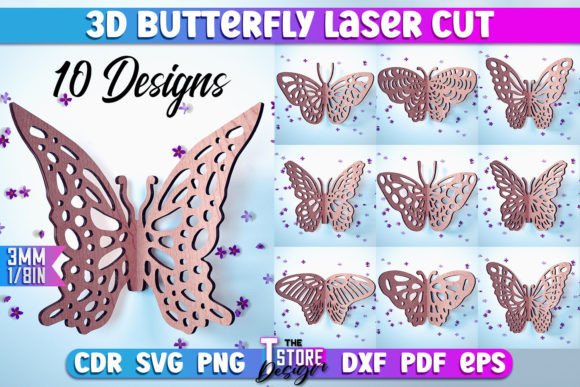
Bringing 3D Butterfly Laser Cut SVG Butterfly Designs to Life
There is a specific kind of magic that happens when a flat sheet of material transforms into something with depth, movement, and shadow. This is exactly what you experience when working with a 3D Butterfly Laser Cut SVG Butterfly design. Unlike standard two-dimensional silhouettes that sit flush against a surface, these layered designs utilize the physics of light and shadow to create an illusion of flight. For makers, crafters, and small business owners, this isn't just a digital file; it is a toolkit for creating tangible art that captures attention in ways flat images simply cannot.
When you download a comprehensive package containing SVG, EPS, PNG, PDF, and DXF files, you are unlocking a versatile resource compatible with almost any workflow. Whether you are running a Glowforge, an xTool, or a traditional industrial CNC router, the utility of these files lies in their adaptability. The core concept is straightforward: by stacking multiple layers of material—usually separated by small spacers or inherent design gaps—you build up the wings and body of the butterfly. This technique turns a simple cut job into a sculptural piece.
Real-World Applications Beyond Basic Crafting
While hobbyists often gravitate toward these designs for personal home decor, the commercial potential for 3D Butterfly Laser Cut SVG Butterfly files is vast. Consider the event planning industry. Wedding decorators are constantly seeking unique backdrops that photograph well without looking cheap or mass-produced. A wall installation featuring dozens of these butterflies, arranged in a swirling pattern from floor to ceiling, creates a dynamic focal point for photo booths or ceremony arches. Because the design relies on layering, you can use inexpensive materials like painted MDF for large installations or premium acrylics for intimate table centerpieces, allowing planners to scale the project to fit any budget.
In the retail sector, visual merchandisers use similar techniques to draw the eye. Imagine a boutique clothing store where the display window features a cascade of butterflies appearing to fly out of a handbag or dress form. The 3D aspect catches the sunlight or store lighting, casting moving shadows throughout the day as the sun angle changes. This adds a level of sophistication that flat vinyl decals lack. Similarly, nurseries and children's playrooms benefit immensely from these designs. Parents looking for safe, non-toxic wall art often prefer wood or acrylic over paper posters. A layered butterfly mobile hanging above a crib not only serves as decoration but also provides visual stimulation for infants due to the contrasting depths and shadows.
Navigating Materials and Machine Compatibility
One of the most critical considerations before diving into a project is understanding your machine's capabilities and the materials you intend to use. The beauty of having a file pack that includes ten variations in formats like DXF and SVG is that you can test different setups without needing to redraw vectors. However, the "3D" effect is entirely dependent on how you manage your layers. If you are using a laser cutter, you must pay close attention to the color coding in your software. Typically, red lines indicate where the machine should cut all the way through, while black lines denote engraving or scoring. Misinterpreting these settings can result in pieces that don't separate correctly or lack the necessary slots for assembly.
Material choice dramatically alters the final aesthetic. Acrylic offers a modern, glossy look that works beautifully with LED backlighting. When light passes through the layered edges of colored acrylic, the butterfly seems to glow from within. On the other hand, plywood or basswood provides a rustic, organic feel that suits farmhouse or bohemian decor styles. With wood, you have the added option of staining or painting individual layers before assembly, which can enhance the depth perception even further. For those using CNC routers, the thickness of the material becomes a more prominent factor. You might need to adjust the file scale slightly to accommodate thicker stock, ensuring that the joining tabs or slots still fit snugly.
The Advantage of Multi-Format File Packs
Why is it so important to have access to SVG, EPS, PNG, PDF, and DXF files all in one archive? The answer lies in the diversity of the maker community. A graphic designer using Adobe Illustrator will prefer EPS or SVG files for their scalability and editability. They might want to tweak the wing shape or add custom textures before sending the job to the laser. Conversely, a user operating older CAD software for a CNC machine might strictly require DXF files to ensure path accuracy. Having ten distinct designs in each format means you aren't stuck repeating the same pattern; you can create varied compositions that look intentional rather than repetitive.
Furthermore, the inclusion of PNG files is a subtle but powerful feature. These raster images allow users to preview the design on mockups before committing to cutting expensive material. You can digitally place the butterfly onto a photo of a client's living room wall to get approval on size and placement. If a client requests a specific color scheme, you can quickly edit the PNG in Photoshop to show them a proof, saving time and material waste. This flexibility makes the product valuable not just for the cutting process, but for the entire client communication workflow.
Practical Considerations for Success
Before purchasing or downloading these designs, it is wise to consider the assembly process. Layered projects require patience and precision. You will need an adhesive strategy that doesn't show. For clear acrylic, UV-curing glue is often the best choice as it dries invisible. For wood, a thin application of wood glue or even double-sided tape sandwiched between layers can work wonders. The design files usually account for kerf—the width of the material removed by the laser—but it is always recommended to run a test cut on a scrap piece of your intended material. This ensures that the layers stack flush without gaps that could compromise the structural integrity or the visual flow.
Another limitation to keep in mind is the complexity of cleaning. While 3D wall art is stunning, the nooks and crannies between layers can accumulate dust over time. For high-traffic areas or outdoor installations, you might need to seal the edges or choose materials that are easy to wipe down. Additionally, if you plan to sell these items, consider the packaging. Layered butterflies are more fragile than flat cuts; they need protective boxing to prevent the wings from snapping during shipping. Factoring this into your pricing model is essential for maintaining profitability.
Ultimately, the value of a 3D Butterfly Laser Cut SVG Butterfly file extends far beyond the digital vector. It represents a bridge between digital design and physical craftsmanship. Whether you are a seasoned shop owner looking to expand your inventory with trending home decor, an event planner needing a wow-factor installation, or a parent wanting to create a personalized gift, these files provide the foundation for creativity. The key to success lies in experimenting with materials, respecting the nuances of your machinery, and envisioning how the interplay of light and layering can transform a simple shape into a piece of living art. By leveraging the variety of formats and designs available, you ensure that every project feels fresh, professional, and uniquely yours.