Bringing 90s Nostalgia to Life with 3D SVG Elements for Modern Crafting
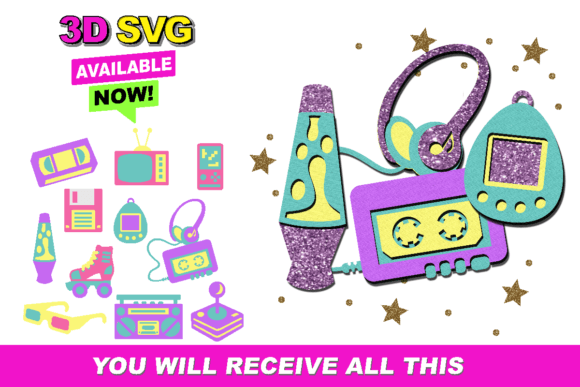
There is a specific kind of magic in the aesthetic of the 1990s that refuses to fade. For many adults today, ranging from millennials who lived through it to Gen Z enthusiasts who discovered it through vintage media, the era represents a unique blend of bold geometry, neon colors, and unapologetic fun. If you are looking to tap into this cultural vein for your next creative project, the Back to the 90s Elements 3D SVG collection offers a practical bridge between digital design and tangible creation. This isn't just about having a picture of a cassette tape or a geometric shape; it is about having the tools to build depth, texture, and interaction into your work.
At its core, this collection provides scalable vector graphics designed specifically for layering. When you download the package, you receive a zipped folder containing SVG files optimized for cutting machines. The "3D" aspect refers to the way these files are constructed. Instead of a single flat image, the elements are often broken down into multiple layers or designed with shadows and highlights that allow you to stack materials. This creates a physical sense of depth that flat printing simply cannot achieve. Whether you are using Silhouette Studio or Cricut Design Space, these files are ready to import, resize, and send to your cutter without the need for complex tracing or manual vectorization.
Why the 90s Aesthetic Still Resonates in Crafting
The resurgence of 90s style is not merely a trend; it is a comfort zone for many. In a world of sleek, minimalist modern design, the chaotic energy of the 90s offers a refreshing change of pace. Using Back to the 90s Elements 3D SVG allows creators to evoke feelings of nostalgia instantly. Imagine walking into a birthday party where the decorations aren't just printed paper but layered, dimensional shapes featuring iconic motifs like boomboxes, slap bracelets, or abstract Memphis-style patterns. The tactile nature of 3D crafting enhances this emotional connection. When a guest picks up a favor box that has actual depth and texture, the experience feels more curated and thoughtful than a standard flat print.
For small business owners and entrepreneurs, leveraging this nostalgia can be a powerful marketing tool. Products that remind customers of their childhood often trigger impulse buys based on emotional recall. By incorporating these 3D elements into product lines, sellers can differentiate themselves from competitors who are still relying on flat, two-dimensional designs. The ability to offer a "premium" feel through layering adds perceived value to items like t-shirts, stickers, and home decor, allowing for better pricing strategies and higher customer satisfaction.
Real-World Applications for Hobbyists and Professionals
The versatility of this SVG collection means it fits seamlessly into various workflows, whether you are a weekend hobbyist or a full-time freelancer. Here is how different users can apply these assets in realistic scenarios:
- Cake Toppers and Edible Decor: One of the most popular uses for 3D SVGs is creating custom cake toppers. Because the files are layered, you can cut the base layer in a sturdy cardstock and the top details in a contrasting color or even acetate for a floating effect. A "Happy Birthday" sign surrounded by 3D geometric 90s shapes adds a dynamic focal point to a celebration cake. Just ensure that if you are placing elements near food, you use food-safe materials or barriers, as the SVG file itself is for cutting non-edible substrates.
- Apparel and Heat Transfer Vinyl (HTV): Fashion designers and DIY clothing makers can use these elements to create textured graphics on t-shirts and hoodies. By layering different colors of HTV, you can simulate shadows and highlights directly on the fabric. For instance, a retro sneaker design can have a sole layer, a main body layer, and a lace layer, all stacked to give the shoe a pop-off-the-shirt look. This technique elevates simple garments into statement pieces suitable for streetwear brands or family reunion shirts.
- Stickers and Planner Decor: The planner community thrives on dimension. Using these SVGs, you can cut intricate 3D stickers that add volume to journal pages. When adhered with foam tape or layered adhesive, these stickers turn a flat planner spread into an interactive scene. This is particularly useful for educators or bloggers who create visual content, as the shadows cast by the 3D elements photograph beautifully for social media posts.
- Party Decorations and Photo Backdrops: Event planners can scale these files up to create large wall decals or hanging mobiles. A backdrop made of oversized, layered 90s icons creates an immersive environment for photo booths. The depth of the cut files catches light differently than flat prints, adding visual interest to event photography without requiring expensive lighting setups.
Technical Considerations Before You Cut
While the Back to the 90s Elements 3D SVG files are designed to be user-friendly, success depends on understanding your specific machine and materials. If you are using a Cricut or Silhouette, the workflow is generally straightforward: import the SVG, ungroup the layers if necessary to assign different colors or materials, and set your cut lines. However, if you are using a different type of cutting machine, it is crucial to verify compatibility. Not all software interprets SVG layers in the same way. Some may require you to manually separate the layers or adjust line weights to ensure the machine recognizes them as cut paths rather than print lines.
Material selection is another critical factor. To achieve the intended 3D effect, the thickness of your material matters. If you are stacking paper layers, standard cardstock (65-80 lb) usually provides enough rigidity to hold its shape without warping. For HTV projects, thinner vinyls are easier to weed and layer, but you must be careful not to over-press, which can flatten the dimensional effect you worked hard to create. Always perform a test cut with a small portion of the design to check for weeding difficulty, especially with intricate 90s geometric patterns that may have small, delicate connections.
Maximizing Value Through Creative Adaptation
Owning these files is just the starting point; the real value comes from how you adapt them to your specific needs. Educators might use the shapes to teach geometry concepts with a fun, retro twist, cutting out large foam versions for classroom manipulatives. Freelance graphic designers might incorporate the cut files into mixed-media art, scanning the physical 3D cuts back into digital formats to create unique textures for client logos or album covers. The key is to view the SVG not as a static image, but as a component in a larger assembly process.
Furthermore, consider the longevity of your projects. Because these are vector files, they are resolution-independent. You can shrink them down for jewelry charms or enlarge them for yard signs without losing quality. This scalability makes the Back to the 90s Elements 3D SVG pack a cost-effective resource. Instead of buying new designs for every project size, you have a master file that grows with your ambitions. Just remember to keep your original zipped folder safe; re-downloading can sometimes be a hassle if the vendor changes their platform or if the collection is discontinued.
In conclusion, integrating 3D elements into your crafting routine opens up a new dimension of creativity—literally. The 90s aesthetic provides a rich visual language that speaks to a wide audience, and having the right tools to execute it in 3D sets your work apart. Whether you are making a one-off gift for a friend or producing inventory for an online shop, focusing on the layering and material choices will yield the best results. Take the time to experiment with different adhesives, spacing, and material combinations. The files are ready to go; the rest is up to your imagination and your willingness to get your hands dirty with glue, vinyl, and cardstock.