Integrating 3D Beech Leaf Tumbler Wrap 3 into Your Sublimation Workflow
In the competitive landscape of custom drinkware production, the difference between a standard product and a best-seller often lies in the quality and uniqueness of the design assets used. For sublimation professionals, small business owners, and creative entrepreneurs, sourcing high-resolution, ready-to-print graphics is a critical step in maintaining efficiency and ensuring consistent output. The 3D Beech Leaf Tumbler Wrap 3 represents a specific type of digital asset designed to streamline this process. It is not merely an image; it is a functional component of a broader manufacturing workflow that bridges the gap between digital conception and physical product creation.
Understanding how to effectively integrate a file like the 3D Beech Leaf Tumbler Wrap 3 into your daily operations requires more than just downloading and printing. It involves a strategic approach to file management, printer calibration, and quality control. This guide explores the practical application of this specific tumbler wrap, detailing how it fits into pre-production planning, the execution phase, and the final quality assurance steps necessary for a professional finish.
The Role of High-Resolution Digital Assets in Production
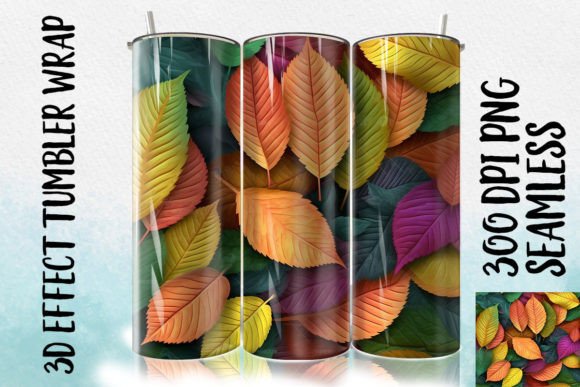
When scaling a sublimation business or managing a series of creative projects, consistency is paramount. Using a standardized digital file, such as the 3D Beech Leaf Tumbler Wrap 3 PNG File, ensures that every unit produced maintains the same visual fidelity. The asset in question typically comes as part of an instant digital download, often containing multiple variations or supporting files within a single ZIP archive. In this specific case, the package includes 37 PNG files, each sized at approximately 9.06 inches by 8.11 inches with a resolution of 300 DPI.
These specifications are not arbitrary; they are engineered to match the surface area of standard 20oz straight tumblers, which are the industry workhorses for custom drinkware. By utilizing a file that is already sized and resolved correctly, you eliminate the guesswork involved in resizing images, which can often lead to pixelation or distortion. The 300 DPI (dots per inch) standard is crucial for sublimation because it ensures that the ink transfers sharply onto the polymer coating of the tumbler, preserving the intricate details of the beech leaf texture and the depth of the 3D effect.
For marketers and content creators, having access to a library of such assets allows for rapid prototyping. You can visualize how a specific nature-inspired theme performs with your audience before committing to large inventory purchases. This reduces waste and allows for a more agile response to market trends, such as the growing consumer preference for organic, botanical aesthetics.
Pre-Production: Preparation and Compatibility
Before the printer ever heats up, the integration of the 3D Beech Leaf Tumbler Wrap 3 begins with digital preparation. Since this is a digital-only product, the immediate outcome of your purchase is a ZIP file containing the necessary PNGs. The first step in your workflow should be organization. Create a dedicated folder on your local drive or cloud storage specifically for tumbler wraps. Inside, categorize files by theme, size, or seasonal relevance. Storing the 37 included PNG files in a structured manner ensures that when an order comes in, you can locate the correct variation instantly without disrupting your production flow.
Compatibility is another vital factor. These files are universally compatible with major design software suites such as Adobe Photoshop, Illustrator, Canva, and CorelDRAW. However, the workflow differs slightly depending on your tool of choice. If you are using raster-based editors like Photoshop, the PNG format supports transparency, allowing you to layer the beech leaf design over solid colors or other background textures if your specific tumbler blank requires it. If you are using vector-based tools, you may need to import the PNG as a linked image. Understanding your software's handling of high-resolution bitmaps prevents unexpected blurring during the export phase.
It is also essential to verify the dimensions against your specific tumbler blanks. While 9.06 x 8.11 inches is the standard for many 20oz tumblers, manufacturers vary slightly. A prudent practice is to perform a test print on regular paper, wrap it around your specific blank, and secure it with tape. This "dry fit" confirms that the seam aligns correctly and that no critical parts of the beech leaf design are lost in the overlap or cut off at the edges. This simple check saves costly sublimation paper and ink in the long run.
Execution: From Screen to Sublimation
Once the file is prepared and verified, the process moves to the printing stage. The quality of the final product is heavily dependent on how the digital file interacts with your printer settings. When printing the 3D Beech Leaf Tumbler Wrap 3, ensure your printer driver is set to "High Quality" or "Photo" mode. Select the correct paper profile—usually high-release sublimation paper—and mirror the image horizontally. Mirroring is a non-negotiable step in sublimation; failing to do so will result in reversed text or asymmetrical design elements that look unprofessional.
During the pressing phase, the workflow demands precision. The 3D effect in the design relies on accurate heat and pressure to transfer the depth perception inherent in the graphic. Use a tumbler press that provides even pressure around the circumference. Uneven pressure can cause ghosting or blurred areas, which would obscure the fine details of the leaf veins. Typical settings range between 380°F to 400°F for 5 to 6 minutes, but always refer to your specific paper and tumbler manufacturer guidelines. The goal is to allow the gasified ink to penetrate the polymer coating deeply, locking in the vibrant greens and earthy tones of the beech leaf pattern.
For entrepreneurs managing a team, documenting these settings is crucial. Create a standard operating procedure (SOP) that includes the specific settings used for the 3D Beech Leaf Tumbler Wrap 3. This ensures that whether you or an employee is running the job, the output remains consistent. Consistency builds brand reputation, and customers are more likely to return when they know exactly what quality to expect.
Post-Production and Quality Control
The workflow does not end when the timer beeps. Post-production handling is where the durability and finish of the product are secured. After removing the tumbler from the press, allow it to cool naturally or use a cooling rack, depending on your preference. Once cool, peel away the sublimation paper carefully. Inspect the wrap under good lighting. Look for any signs of banding, color shifts, or incomplete transfers. The 300 DPI resolution of the source file should yield a crisp image; if the result is grainy, the issue likely lies in the printer settings or the paper quality, not the digital asset itself.
For those selling these items online, the visual appeal of the final product is your primary marketing tool. The natural, textured look of the beech leaf design photographs well in various lighting conditions. Use the high-quality finished products to create lifestyle images for your e-commerce store, social media channels, or marketing emails. Show the tumbler in use—on a desk, in a car cup holder, or outdoors—to help potential buyers visualize the product in their own lives. This contextualizes the utility of the design and can significantly boost conversion rates.
Maximizing Efficiency and Long-Term Value
Integrating assets like the 3D Beech Leaf Tumbler Wrap 3 into your business model offers long-term value beyond a single sale. Because these are digital downloads, there is no inventory cost for the design itself. You pay once and can produce unlimited physical units, making the marginal cost per item very low after the initial investment. This scalability is ideal for freelancers and small business owners looking to expand their product lines without significant upfront capital.
Furthermore, these files can be remixed or combined with other elements to create unique collections. For instance, you could pair the beech leaf wrap with matching coasters or laptop sleeves, creating a cohesive "nature office" bundle. This cross-selling strategy increases the average order value and enhances the customer experience. By viewing the digital file as a modular component of a larger ecosystem, you unlock new revenue streams and creative possibilities.
Ultimately, the success of using a specific wrap design hinges on the seamless integration of digital preparation, precise execution, and rigorous quality control. The 3D Beech Leaf Tumbler Wrap 3 provides the foundational visual element, but it is your workflow that transforms it into a tangible, high-value product. By adhering to best practices in file management, printing protocols, and post-processing, you ensure that every tumbler leaving your shop meets professional standards. This disciplined approach not only satisfies customers but also streamlines your operations, allowing you to focus on growth and innovation in the custom merchandise market.
Remember, while the digital file is ready for instant download and use, the knowledge of how to apply it effectively is your most valuable asset. Continuously refine your process, stay updated on sublimation technologies, and experiment with how different designs interact with various blanks. In doing so, you turn a simple PNG file into a cornerstone of a thriving creative business.