Integrating the Cartoon Vampire 3D Paper Cut Light Box into Your Creative Workflow
For creators, small business owners, and hobbyists managing a steady stream of seasonal projects, the challenge often lies not in finding ideas, but in executing them efficiently without sacrificing quality. The Cartoon Vampire 3D Paper Cut Light Box represents more than just a festive decoration; it is a streamlined asset designed to fit seamlessly into a broader production pipeline. Whether you are a marketer preparing Halloween campaigns, an educator planning classroom activities, or a freelancer fulfilling custom orders for clients, understanding how to integrate this specific design format can significantly enhance your output consistency and reduce turnaround time.
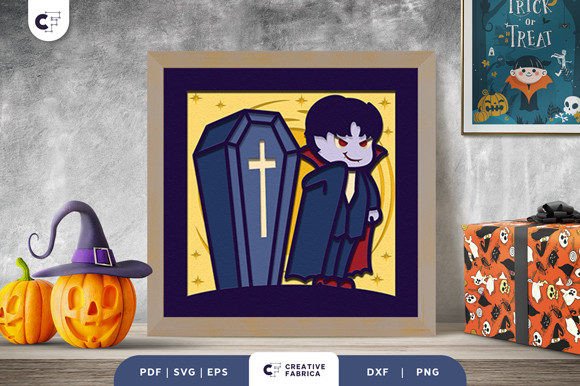
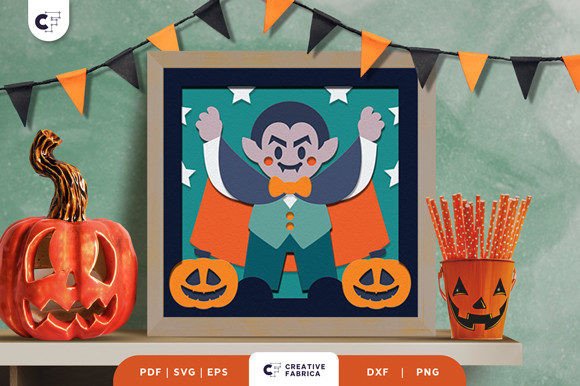
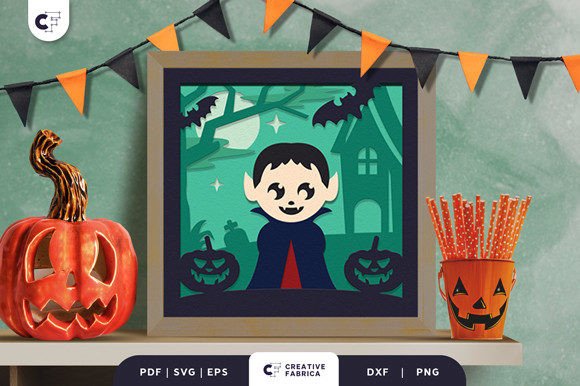
This project centers on a whimsical interpretation of Halloween tropes, featuring a baby vampire posing with his cloak. By combining unexpected elements—cuteness and horror—it creates a unique visual hook that stands out in saturated markets. However, the true value for the professional creator lies in the technical specifications and the structured layering system that allows for rapid replication and customization.
Strategic Planning and Asset Preparation
Before cutting a single sheet of cardstock, successful implementation begins with file management and material selection. The Cartoon Vampire 3D Paper Cut Light Box is typically delivered in a suite of vector and raster formats, including SVG, PDF, EPS, PNG, and DXF. This variety is crucial for workflow flexibility. If your primary tool is a Silhouette Cameo, the SVG format offers the cleanest cut paths. Conversely, if you are using a Cricut Explore or Maker, the DXF or SVG files ensure compatibility with Design Space. For those utilizing laser cutters in a more industrial setting, the EPS or PDF files provide the precision needed for intricate details.
Material consistency is another pillar of a reliable workflow. The design is optimized for Encore Cardstock 80 lb cover (216 gsm). Using this specific weight is not merely an aesthetic choice; it is a structural necessity. Lighter papers may fail to hold the rigid shapes required for the nine distinct layers, leading to sagging or loss of depth. Heavier boards might be difficult to cut cleanly without burning edges or requiring multiple passes, which slows down production. By standardizing your inventory around this 80 lb specification, you eliminate variables that could affect the final product's quality, ensuring that every unit leaving your workspace meets a high standard.
Execution: From Digital File to Physical Product
The construction of the shadow box follows a logical assembly line process that can be scaled from a single hobby project to a small-batch manufacturing run. The design consists of 9 layers, each contributing to the overall depth and narrative of the scene. The process begins with the digital setup. Import your chosen file format into your cutting software. At this stage, verify the dimensions. The standard size is 20.32×20.32 cm (approximately 8x8 inches). If your workflow requires different sizing for specific client needs, most vector formats allow for proportional scaling, though you must recalculate material usage accordingly.
Once the machine is loaded with the appropriate cardstock colors, the cutting phase begins. Efficiency here depends on organization. A practical tip for high-volume creators is to cut all identical layers across multiple projects in one go before changing materials. This reduces machine idle time and minimizes the risk of color mismatches. After cutting, the "weeding" process—removing excess material—should be performed immediately while the adhesive backing (if used) is still manageable.
Assembly is where the three-dimensional effect comes to life. The instructions generally dictate arranging the layers sequentially. To secure their place and maintain the necessary spacing for the light to penetrate effectively, you will need a reliable adhesive strategy. Foam tape strips are commonly used between layers to create the shadow depth. In a professional setting, pre-cutting these foam spacers or using a dispensing gun for liquid adhesive can speed up this stage significantly. The goal is to align the layers perfectly so that the baby vampire's cloak and features align seamlessly with the background elements.
Integration into Broader Business and Creative Workflows
Understanding where the Cartoon Vampire 3D Paper Cut Light Box fits into your larger operational picture is key to maximizing its ROI. For entrepreneurs and small business owners, this asset serves as an excellent entry point for seasonal product lines. Because the design relies on layered paper rather than complex electronics or molding, the overhead costs are low, and the inventory storage requirements are minimal. You can store flat sheets of cardstock and digital files, only assembling the final product upon receiving an order. This "just-in-time" manufacturing approach reduces waste and frees up capital.
For marketers and content creators, the visual appeal of the 3D shadow box offers rich opportunities for social media engagement. The interplay of light and shadow creates dynamic content that performs well on platforms like Instagram and Pinterest. You can document the creation process—from the raw cuts to the illuminated final piece—to build a narrative around your brand's craftsmanship. This behind-the-scenes content humanizes your business and demonstrates expertise, adhering to E-E-A-T principles by showing real experience and knowledge.
Educators and workshop leaders can also utilize this project as a teaching tool. The nine-layer structure provides a tangible lesson in depth, perspective, and sequencing. It allows students to understand how two-dimensional plans translate into three-dimensional objects. Furthermore, the humorous twist of a "scary" baby vampire trying to scare people off opens discussions about subverting expectations in storytelling and design.
Quality Control and Long-Term Usability
Maintaining consistency across multiple units requires strict quality control measures. One common variable in paper crafting is color variance. As noted in the product specifications, final product colors may vary slightly due to lighting sources and the inherent batch differences in paper manufacturing. To mitigate this, professionals should source all cardstock for a specific batch of orders from the same lot number whenever possible. Additionally, testing a single prototype under the intended lighting conditions before mass assembly ensures that the shadows fall correctly and the "cute" factor of the vampire is not lost in darkness.
The durability of the final piece also depends on the framing process. Placing the assembled layers in a suitable deep-box frame protects the delicate paper edges from humidity and physical damage. For clients intending to use these as long-term decor, recommending UV-protective glass or acrylic can prevent fading over time, adding value to your service offering.
Optimizing the Creative Process
To fully leverage the Cartoon Vampire 3D Paper Cut Light Box, consider how it interacts with other tools in your arsenal. If you use project management software, treat the cutting, weeding, and assembly as distinct tasks with estimated time allocations. This helps in accurate pricing and deadline setting for client work. If you are a freelancer, bundling this item with other Halloween-themed assets can create comprehensive packages for clients looking to decorate entire spaces or run cohesive marketing campaigns.
The versatility of the file formats also means you can adapt the design for different outputs. While the primary use is a physical light box, the PNG files can be utilized for digital mockups, allowing you to present the finished look to clients before committing to physical production. This reduces the risk of dissatisfaction and streamlines the approval process.
In conclusion, the Cartoon Vampire 3D Paper Cut Light Box is a robust resource that bridges the gap between creative expression and practical execution. By focusing on preparation, utilizing the correct materials like 80 lb cardstock, and integrating the assembly into a disciplined workflow, creators can produce high-quality, engaging results efficiently. Whether the goal is to capture a cool moment on Halloween night, fulfill a commercial order, or teach a class on spatial design, this project offers a structured yet flexible foundation for success.
For those ready to begin, ensuring you have the right supplies is the first step. All cardstock featured in optimal versions of this project is Encore Cardstock 80 lb cover 216 gsm. You can explore compatible materials at the 12×12 Cardstock Shop (paid link). Remember, the images provided in digital previews are for reference; the tactile reality of the layered paper and the glow of the light box offer a unique charm that digital screens cannot replicate. With careful planning and execution, this baby vampire shadow box becomes more than a craft—it becomes a testament to efficient, creative production.