Strategic Deployment of Halloween Haunted House 3D SVG for Brand Impact and Creative Efficiency
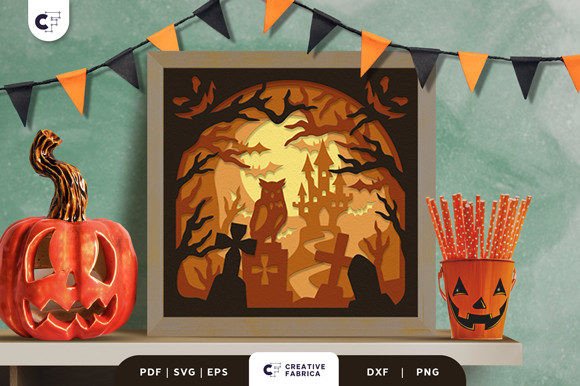
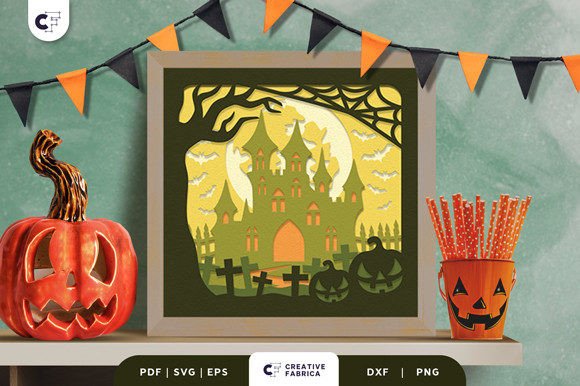
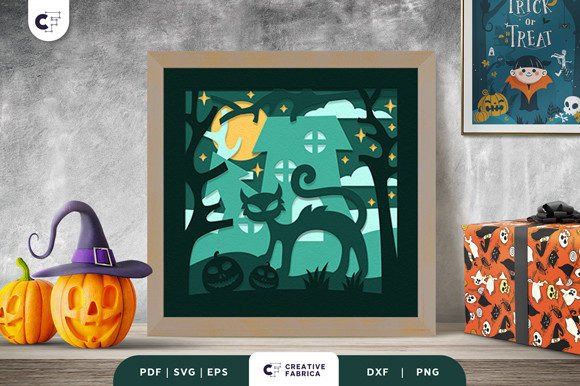
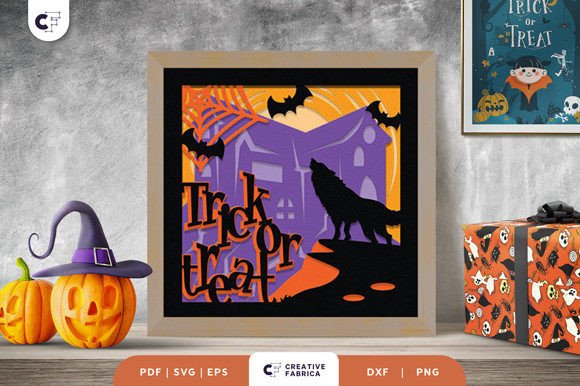
In the competitive landscape of seasonal marketing and creative production, the difference between a forgettable decoration and a memorable brand experience often lies in the precision of execution. The Halloween Haunted House 3D SVG represents more than just a digital file; it is a strategic asset for creators, small business owners, and marketers looking to maximize impact while minimizing production friction. This specific design—a deep, rectangular shadow box depicting a spooky and eerie scene complete with a howling wolf, spider webs, and bats fleeing an abandoned home—offers a tangible way to elevate customer experience and operational efficiency during the critical Q4 season.
When we analyze the utility of a Halloween Haunted House 3D SVG, we must look beyond the immediate aesthetic appeal. The true value proposition for professionals lies in the scalability and adaptability of the format. Unlike static images or pre-manufactured decor that limits customization, an SVG (Scalable Vector Graphics) file provides the foundational architecture for high-quality physical products. Whether you are a hobbyist aiming for perfection in your home display or an entrepreneur producing inventory for a local craft fair, the ability to manipulate layers ensures that the final output aligns perfectly with your brand standards and spatial requirements.
Operational Efficiency Through Layered Design Architecture
The structural integrity of this specific haunted house design relies on its six distinct layers. For a project manager or a solo creator, understanding the mechanics of these layers is crucial for resource planning. The design utilizes a combination of paper, cardboard, LED lights, and decorative elements to create depth within a glass-fronted frame. This is not merely an artistic choice; it is an engineering decision that dictates material sourcing and assembly time.
To execute this effectively, one must approach the Halloween Haunted House 3D SVG with a clear bill of materials. The requirement for cutting machines or high-resolution printers means that workflow integration is key. If you are operating a small batch production line, the vector nature of the SVG allows for rapid prototyping. You can test different cardstock weights without losing fidelity. The recommendation to use Encore Cardstock 80 lb cover 216 gsm is not arbitrary; it is a specification derived from the need for structural rigidity. Thinner papers may fail to hold the 3D form required for the "deep, rectangular frame," leading to a collapse of the visual narrative. By adhering to these material specifications, you ensure that the "howling wolf" and "flying bats" maintain their intended positions, preserving the eerie atmosphere that drives engagement.
Enhancing Customer Experience and Brand Positioning
For retailers and service providers, seasonal decor serves as a silent ambassador for the brand. A generic plastic skeleton signals low effort, whereas a meticulously crafted shadow box featuring large "trick-or-treat" typography signals attention to detail and quality. Integrating a Halloween Haunted House 3D SVG into your physical space or product lineup can significantly influence consumer perception. It transforms a passive observation into an immersive experience.
Consider the psychological impact of the scene: the abandoned home, the spider webs, and the dynamic sense of motion created by the bats. These elements tell a story. When customers encounter this level of detail, whether in a storefront window or as a premium gift item, they associate those qualities with the provider. This is where strategic planning comes into play. Instead of randomly purchasing decorations, decision-makers should curate environments that reflect their brand's commitment to excellence. The Halloween Haunted House 3D SVG allows for this curation because it offers control over the final color palette and lighting conditions, ensuring the output matches the desired mood.
Risk Mitigation and Strategic Planning
However, adopting new digital assets without a clear strategy carries risks. The primary pitfall in using complex 3D SVG files is the mismatch between design intent and execution capability. Without proper planning regarding frame size and layer spacing, the final product may appear flat or cluttered, negating the intended 3D effect. The file size of 20.32×20.32 cm is specific; attempting to scale this significantly larger without adjusting material thickness can lead to structural failure.
Furthermore, reliance on digital previews can be misleading. As noted in the technical specifications, actual final product colors may vary due to lighting sources and paper choice. A strategic operator accounts for this variance by ordering samples before committing to a full production run. This due diligence prevents wasted inventory and protects brand reputation. It is essential to view the Halloween Haunted House 3D SVG not as a plug-and-play solution, but as a component in a broader operational workflow that includes testing, quality assurance, and contingency planning.
Maximizing Versatility Across Formats
The availability of the design in multiple formats—SVG, PDF, EPS, PNG, and DXF—is a critical feature for diverse professional needs. Each format serves a distinct purpose in the production ecosystem:
- SVG & DXF: Ideal for CNC cutting machines and plotters, ensuring clean cuts for intricate details like spider webs.
- PDF & EPS: Best for professional printing services where vector scalability is required for large-format signage or high-resolution proofs.
- PNG: Useful for digital marketing assets, social media previews, and web content where a raster image is sufficient.
This versatility allows a single asset to serve multiple departments within an organization. Marketing can use the PNG for campaign teasers, while operations use the DXF for physical production. This cross-functional utility maximizes the return on investment for the digital asset.
Long-Term Value and Intentional Creativity
The ultimate goal of utilizing tools like the Halloween Haunted House 3D SVG is to foster intentional creativity. In an era of mass-produced homogeneity, the ability to create bespoke, high-quality decor sets professionals apart. It encourages a mindset of continuous improvement and learning. By mastering the interplay of light, shadow, and material depth, creators develop skills that are transferable to other projects and seasons.
Moreover, the reusability of the physical frame combined with the digital flexibility of the SVG means that this asset can evolve. Next year, the same frame could house a different scene, or the lighting could be upgraded to smart LEDs for dynamic effects. This approach supports sustainable practices by reducing waste and encouraging the reuse of high-quality components like the glass front panel and sturdy frames.
For those ready to implement this strategy, sourcing the right materials is the first step. High-quality cardstock is non-negotiable for achieving the desired depth and durability. You can explore suitable options by visiting the 12×12 Cardstock Shop, a resource dedicated to providing the 80 lb cover stock necessary for professional results. Remember, the success of the project hinges on the synergy between the digital file's precision and the physical material's quality.
In conclusion, the Halloween Haunted House 3D SVG is a powerful tool when wielded with strategic intent. It bridges the gap between digital design and physical reality, offering a pathway to enhanced branding, operational efficiency, and creative satisfaction. By focusing on planning, material selection, and risk management, professionals can leverage this asset to deliver exceptional results that resonate with audiences long after the Halloween season has passed. The decision to invest time and resources into such detailed projects is a testament to a commitment to quality—a trait that defines successful enterprises in any industry.