Hauntingly Cute: The Vampire High Collar Shadow Box
There is a specific kind of magic that happens when flat paper transforms into a tangible, breathing scene. It is the difference between looking at a picture and stepping inside a story. For crafters and designers who thrive on atmosphere, the Vampire with High Collar 3D Shadow Box offers a perfect intersection of spooky narrative and technical precision. This isn't just a Halloween decoration; it is a study in depth, layering, and the dramatic interplay of light and shadow. Whether you are a seasoned paper engineer or a beginner looking to elevate your crafting game, this project delivers a masterpiece that feels far more complex than the sum of its parts.
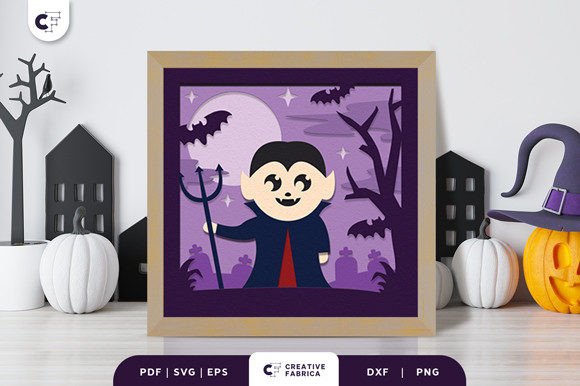
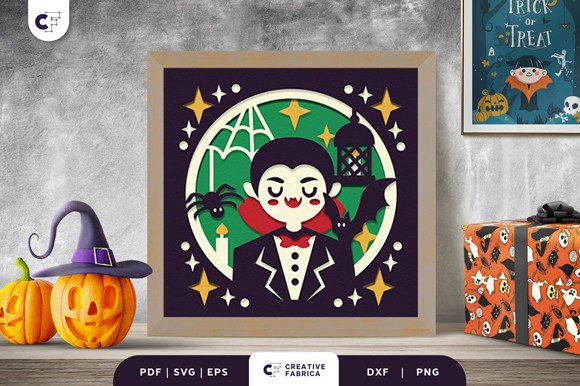
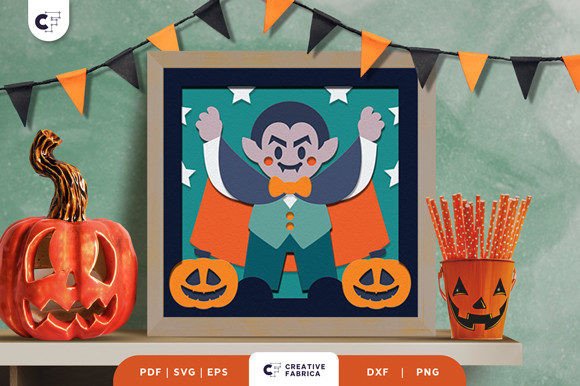
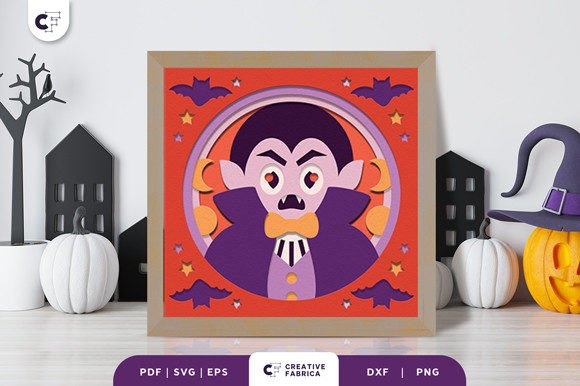
The visual character of this piece is defined by its bold silhouette and intricate detailing. At the heart of the composition stands the vampire, depicted not as a terrifying monster, but with a charming, gothic elegance that fits perfectly within modern "spooky cute" aesthetics. The high collar is the focal point, framing the figure with sharp, architectural lines that draw the eye inward. Surrounding this central figure is a nocturnal landscape, likely featuring bats, moonlight, and perhaps the occasional eerie tree, all meticulously arranged to create a sense of vast space within a compact 20.32×20.32 cm frame. The appeal lies in this contrast: the stark, scary elements of classic horror softened by the warmth of hand-cut cardstock and the playful nature of the design.
Mastering Depth Through Strategic Layering
What sets the Vampire in Halloween Night 3D Shadow Box apart from standard cut files is its structural intelligence. Comprising eight distinct layers, this design leverages the principles of parallax to create a stunning 3D effect. In the world of editorial design and packaging design, we often talk about visual hierarchy—guiding the viewer's eye through importance and placement. In paper crafting, this hierarchy is physical. Each layer of cardstock adds actual distance between elements, allowing shadows to fall naturally and creating pockets of darkness that enhance the mood.
For the creator, this means every sheet of paper plays a critical role. The background sets the tone, while the mid-ground elements build the environment, and the foreground features the protagonist. When assembled with PVA glue, these layers do not just stack; they interact. Light hitting the box from different angles will change the appearance of the piece throughout the day, much like how a dynamic logo design must work across various media. This project teaches valuable lessons in spatial reasoning. You learn how a simple shift of two millimeters can alter the perception of depth, a skill that translates directly to digital web design and UI layout where z-index and stacking contexts rule the user experience.
The requirement for a Cricut cutting machine ensures that every intricate detail of the vampire's suit and the surrounding foliage is rendered with crisp accuracy. However, the true artistry comes in the assembly. Using Encore Cardstock 80 lb cover 216 gsm is highly recommended for this specific build. Why? Because lighter papers might warp under the weight of the glue or fail to cast the sharp shadows necessary for the 3D illusion to hold. Heavier cardstock provides the rigidity needed to maintain the gaps between layers, ensuring the "close-up" effect remains punchy and defined. This attention to material specification is something any professional brand strategist or publisher understands: the medium is just as important as the message.
From Digital File to Tangible Brand Asset
While this project is rooted in home crafting, its applications extend far beyond the hobbyist's desk. For entrepreneurs and small business owners, particularly those in the seasonal decor market, understanding the mechanics of a successful shadow box is invaluable. The Vampire with High Collar 3D Shadow Box serves as an excellent case study in product development. It demonstrates how a single concept can be adapted across multiple formats—SVG, PDF, EPS, PNG, and DXF—to suit different production needs. This versatility mirrors the requirements of a robust typeface family that must perform equally well on a billboard and a mobile screen.
Consider the implications for social media graphics and content creation. In an era where static images often get scrolled past, three-dimensional content stops the thumb. A time-lapse video of assembling this shadow box, showing the gradual emergence of the vampire from the darkness, is highly engaging content. It showcases process, skill, and the final aesthetic payoff. For marketers, this highlights the power of "behind-the-scenes" storytelling. Just as a premium font conveys quality and attention to detail in a brand identity, a well-crafted physical product communicates care and craftsmanship to the consumer.
Furthermore, the stylistic choices made in this design offer lessons in font pairing and visual consistency. The sharp angles of the vampire's collar might pair beautifully with a geometric sans serif font for accompanying signage, while the whimsical, scary-cute vibe could be complemented by a quirky display font or even a jagged handwritten font. Understanding these relationships helps in creating cohesive design assets. If you were to brand a Halloween event or a limited-edition product line, the visual language established by this shadow box—gothic yet approachable, detailed yet clear—provides a strong foundation. It proves that "scary" doesn't have to mean alienating; it can be inviting, much like a well-designed user interface that guides rather than confuses.
Practical Considerations for the Modern Creator
Executing this project requires more than just enthusiasm; it demands a strategic approach to materials and tools. When selecting your cardstock, remember that color variance is real. The preview images you see online are digital representations, but the final product depends heavily on your lighting sources and the specific pigment of your paper. A deep purple might look black in low light, altering the intended contrast. This is akin to checking color profiles (CMYK vs. RGB) before sending a job to print. Always test a single layer first to ensure your machine settings are calibrated for the 216 gsm weight.
Readability and clarity are paramount, even in abstract art. In typography, we worry about kerning and leading to ensure text is legible. In shadow boxing, we worry about negative space. If the layers are too crowded, the 3D effect collapses into a muddy mess. If they are too sparse, the connection between elements is lost. The eight-layer structure of the Vampire with High Collar 3D Shadow Box has been optimized to balance these factors, but your execution matters. Use spacers if necessary, or adjust the amount of glue to prevent seepage that might obscure fine details.
Finally, consider the licensing and commercial potential. These files are often available for both personal and commercial use, but always verify the specific terms. For publishers and content creators, having access to high-quality commercial font equivalents in vector form (like SVG and EPS) allows for infinite scalability. You can shrink this design for a gift tag or enlarge it for a window display without losing fidelity. This flexibility is the hallmark of professional-grade design assets. By investing time in mastering this build, you aren't just making a Halloween decoration; you are refining your eye for composition, your handling of materials, and your ability to translate digital concepts into physical reality. The result is a piece of art that captures the magic of Halloween nights, standing as a testament to the enduring power of creative craftsmanship.